The Indian Learner’s Guide to the JLPT: Dates, Levels, Scoring and Everything In Between
If you’re learning Japanese in India, the Japanese-Language Proficiency Test — the JLPT — is the milestone that turns your effort into something the world recognises. It’s the global standard for certifying how well non-native speakers read, understand and process Japanese, and a good JLPT result opens doors to jobs, universities and visa pathways in Japan and beyond.
At Saachi, we prepare students for levels N5 through N2, and the same questions come up in almost every enquiry: When is the exam? Which level should I take? How is it scored? This guide pulls all of that together in one place, written for learners sitting the test from India.
What the JLPT actually is — and who can take it
The JLPT is held twice a year, in July and December, in Japan and across the world. It’s open to anyone who isn’t a native Japanese speaker, with no age limit and no prior qualification needed. In India, the test runs through authorised host institutions in several cities, so your first practical step is to find your nearest centre and note its registration window — these open and close well before the exam date, and missing them means waiting six months.
In 2026, the two sittings fall on Sunday, 5 July and Sunday, 6 December. Some cities outside Japan offer only one sitting a year, so always confirm the schedule for your specific centre rather than assuming both dates are available.
One reassurance for anyone worried about consistency: although the paper can vary slightly by region, scoring and certification are uniform worldwide. A certificate earned in Bangalore carries exactly the same weight as one earned in Tokyo.
Choosing the right level
This is the decision that trips up most learners. The JLPT runs from N5, the entry level, up to N1, the most advanced — and there’s no single “correct” answer, only the level that’s realistic for your next sitting. Aiming too high wastes a six-month cycle; aiming too low undersells your ability.
The official “Summary of Linguistic Competence” and the free sample questions on the JLPT website are useful self-checks, but the honest truth is that most learners struggle to judge themselves accurately. This is where structured guidance helps — at Saachi we assess where you genuinely stand and recommend the level you can clear with confidence, then build your preparation around it.
What the exam looks like
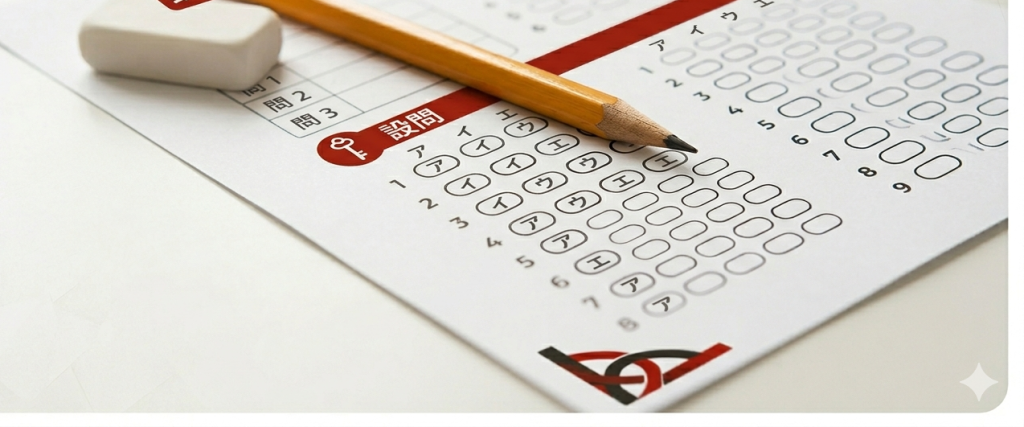
A few things surprise first-time candidates. The JLPT has no speaking or writing test — it measures language knowledge (vocabulary and grammar), reading, and listening only. Everything is multiple choice and computer-scored, with most questions offering four options and some listening items offering three. And while a handful of questions brush against Japanese cultural context, none of them require cultural knowledge to answer.
You must sit all sections of your level in a single sitting; you can’t pick and choose. You also can’t take the question paper home — doing so results in automatic failure.
How scoring and passing really work
Here’s the part worth understanding before you walk in, because it shapes how you should prepare.
To pass, you have to clear two separate bars: an overall total mark and a minimum in every individual scoring section. Fall below the minimum in even one section — say, listening — and you fail, no matter how high your total score is. A lopsided candidate who is brilliant at reading but weak at listening can still fail. This is exactly why balanced, all-round preparation matters more than cramming your strongest skill.
The pass marks for each level are:
| Level | Pass mark (out of 180) | Section minimums |
|---|---|---|
| N1 | 100 | 19 each — Language Knowledge / Reading / Listening |
| N2 | 90 | 19 each — Language Knowledge / Reading / Listening |
| N3 | 95 | 19 each — Language Knowledge / Reading / Listening |
| N4 | 90 | 38 (Knowledge + Reading, of 120) · 19 (Listening) |
| N5 | 80 | 38 (Knowledge + Reading, of 120) · 19 (Listening) |
One more thing that confuses people: the JLPT uses a “scaled score” rather than a simple count of correct answers, and scores are verified by specialists. So your result may not match your own tally — and individual re-checks aren’t offered. If you fail, you also can’t retake just the weak section; pass or fail is judged only when you sit the full level again.
Results and your certificate
Score Reports are sent by post through your local centre — roughly early October for the July test and early March for the December test. Results aren’t given out by phone or email, so if nothing arrives by the end of the expected month, contact your centre directly.
The good news once you pass: the JLPT certificate never expires. That said, individual employers and universities sometimes set their own validity window when they consider applications, so it’s worth checking their specific requirements. Many Japanese universities do use JLPT results as an admissions reference, and if you ever lose your certificate, a duplicate can be requested for a fee for any test taken from 1992 onward.
New from December 2025: the CEFR reference level
From the December 2025 sitting onward, passing score reports also show a CEFR reference level (A1 to C1) alongside your JLPT result. The CEFR is the widely used international scale for language ability, so this makes your Japanese level easier to compare against other tests and frameworks.
It’s important to know that this is reference information only. It doesn’t change how the JLPT is scored, what the test contains, or how you should study. As a rough guide, a strong N3 or N2 pass can map to CEFR B1, with higher N2 scores reaching B2 — but the exact band depends on your total score, so two people who both pass N2 can receive different CEFR indications.
Where Saachi comes in
The JLPT rewards consistent, structured study far more than last-minute effort — and the two-bar pass system means you can’t afford a blind spot in any skill. That’s the philosophy behind how we teach at Saachi, from your first hiragana at N5 to business-ready Japanese at N2.
If you’re unsure which level to register for, or you want a preparation plan built around the next exam date, talk to our team. We’ll help you choose the right level, structure your study, and walk into that exam hall ready.
Ready to start? Reach out to Saachi Japanese Language Institute to find the right JLPT course for your level.