Cracking the JLPT N5 Exam- The SAACHI WAY!
Preparing for the JLPT N5 exam can feel like a big step when you’re just starting your Japanese language journey—but it’s also one of the most rewarding milestones. As the beginner level of the Japanese Language Proficiency Test, N5 is designed to assess your ability to understand basic Japanese used in everyday situations. With the right approach, consistent effort, and smart study techniques, you can confidently pass this exam.
At Saachi, we cover every aspect of your exam preparation. And when you add the extensive and exclusive Saachi conversation practice to this mix, the understanding and adaptability of the language increases two-fold.
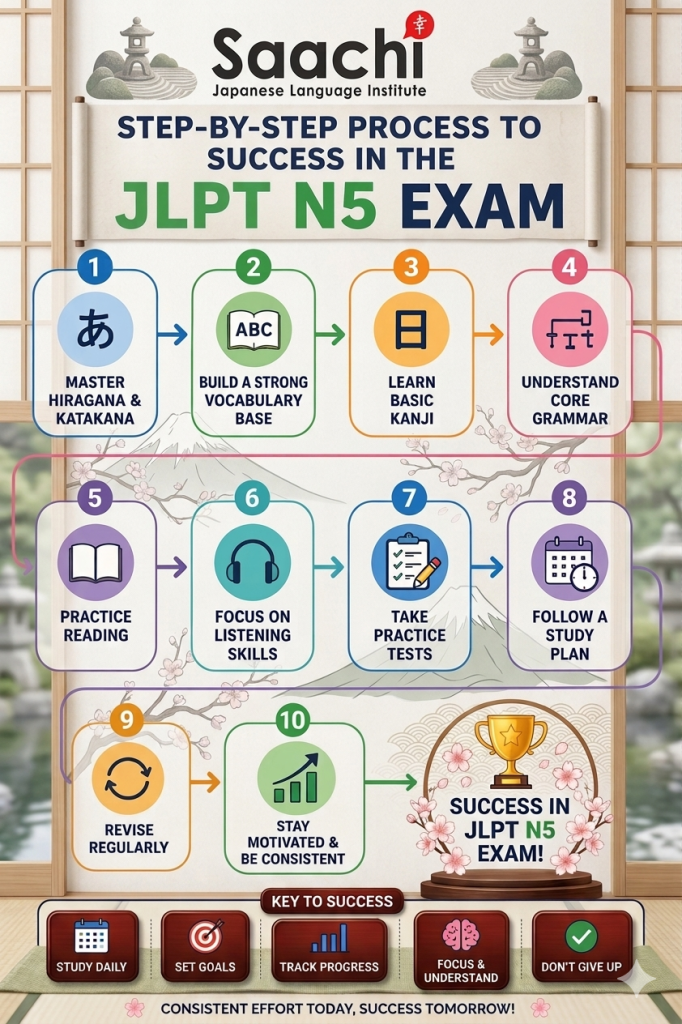
Go through this N5-specific, step-by-step guide for everything that you need to prepare effectively.
Understanding the JLPT N5 Exam
Before diving into preparation, it’s important to understand what the exam tests. The JLPT N5 evaluates your skills in three main areas: vocabulary, grammar, reading, and listening. You’ll need to recognize around 800 words, about 100 kanji, and understand basic sentence structures.
The exam is divided into sections that test language knowledge (vocabulary and grammar), reading comprehension, and listening ability.
Step 1: Master Hiragana and Katakana
Your first priority should be learning the two basic Japanese scripts: Hiragana and Katakana. These are essential because all grammar and most beginner-level materials rely heavily on them.
Aim to:
- Read both scripts fluently without hesitation
- Write them from memory
- Recognize them instantly in words
Practice daily using writing drills, flashcards, or apps. Without this foundation, progressing further will be difficult.
Step 2: Build a Strong Vocabulary Base
Vocabulary is one of the most important components of the N5 exam. You should aim to learn around 800 commonly used words.
Focus on:
- Everyday nouns (food, places, objects)
- Basic verbs (eat, drink, go, see)
- Adjectives (big, small, hot, cold)
- Numbers, dates, and time expressions
Instead of memorizing random lists, try to learn words in context. For example, learn verbs along with example sentences. This helps with both retention and understanding.
Spaced repetition is highly effective here. Review words regularly so they move into your long-term memory.
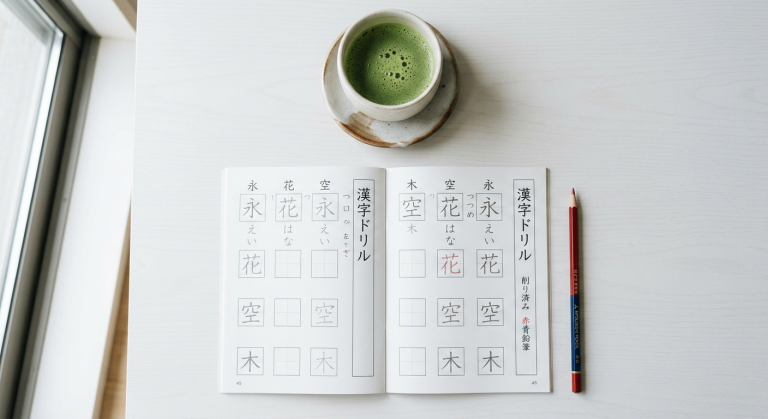
Step 3: Learn Basic Kanji
Kanji can seem overwhelming at first, but N5 requires only about 100 basic characters. These are commonly used and often represent simple concepts like numbers, days, and basic nouns.
Start with:
- Numbers (一, 二, 三, etc.)
- Days (日, 月, 火, etc.)
- Basic concepts (人, 水, 山, 川)
Rather than memorizing kanji alone, learn them with vocabulary words. For example, instead of just learning 日, learn it in words like 日本 (Japan) or 日曜日 (Sunday). This makes it more practical and easier to remember.
Step 4: Understand Core Grammar
Grammar forms the backbone of the language. At the N5 level, you’ll need to understand basic sentence patterns and how particles function.
Key areas include:
- Sentence structure (Subject–Object–Verb)
- Particles like は, が, を, に, で
- Verb conjugations (present, past, negative, てform, た form, casual form etc.)
- Question formation
- Basic expressions (likes, dislikes, existence, possession)
Instead of just memorizing rules, focus on understanding how grammar is used in real sentences. Practice forming your own sentences daily, even simple ones like “I eat rice” or “I go to school.”
Step 5: Practice Reading
Reading may seem simple at N5, but it can still be tricky if you’re not used to Japanese sentence structure.
You’ll encounter:
- Short passages
- Simple dialogues
- Basic instructions or notices
To improve:
- Read slowly and carefully
- Break sentences into smaller parts
- Identify particles to understand meaning
Start with very basic texts and gradually increase difficulty. Even reading simple children’s material or beginner-level passages can help build confidence.
Step 6: Focus on Listening Skills
Many learners underestimate the listening section, but it plays a crucial role in your overall score.
The listening test includes:
- Short conversations
- Everyday situations
- Questions based on what you hear
To improve:
- Listen to Japanese daily, even if only for 10–15 minutes
- Repeat phrases aloud to improve recognition
- Focus on understanding the overall meaning, not every word
At first, it may feel fast or confusing, but with consistent exposure, your ears will adjust to the rhythm and sounds of the language.
Step 7: Take Practice Tests
Mock tests are one of the most effective ways to prepare. They help you:
- Get familiar with the exam format
- Manage your time effectively
- Identify weak areas
Start with section-wise practice, then move on to full-length tests. After each test, review your mistakes carefully. Understanding why you got something wrong is more important than just knowing the correct answer.
Step 8: Create a Study Plan
Consistency is more important than intensity. Studying a little every day is far more effective than cramming occasionally.
A simple study routine could include:
- 15 minutes of vocabulary review
- 15 minutes of grammar practice
- 10 minutes of kanji
- 10–15 minutes of listening
Adjust this based on your schedule, but aim for daily exposure to the language.
Step 9: Revise Regularly
Revision is key to long-term retention. Without it, you’ll forget what you’ve learned.
Use techniques like:
- Weekly review sessions
- Flashcards for quick recall
- Revisiting old grammar points
Follow one thumb rule- to practice the language at least one hour every day. This rule can be for upto 2 hours just one month before the exam.
Step 10: Stay Motivated
Language learning is a gradual process, and it’s normal to feel stuck at times. The key is to stay consistent and motivated.
You can:
- Set small, achievable goals
- Track your progress
- Reward yourself for milestones
Try to make learning enjoyable by incorporating things you like—such as watching simple Japanese videos, listening to music, or practicing with friends.
Common Mistakes to Avoid
Many beginners make similar mistakes while preparing for N5. Being aware of them can save you time and effort.
- Ignoring listening practice
- Memorizing without understanding
- Skipping revision
- Not practicing enough reading
- Trying to learn too much too quickly
Avoid rushing through the syllabus. Focus on understanding and retention instead.
Final Thoughts
Preparing for the JLPT N5 exam is less about difficulty and more about consistency. It’s your first step into the world of Japanese, and building a strong foundation here will make higher levels much easier.
With steady effort, smart study techniques, and regular practice, passing the N5 exam is absolutely achievable. More importantly, the skills you gain during this process will stay with you as you continue your Japanese learning journey.
If you stay consistent and patient, you won’t just pass the exam—you’ll truly start understanding the language.
いっしょに がんばりましょう みなさん!
At Saachi, we see you through- till the end!